

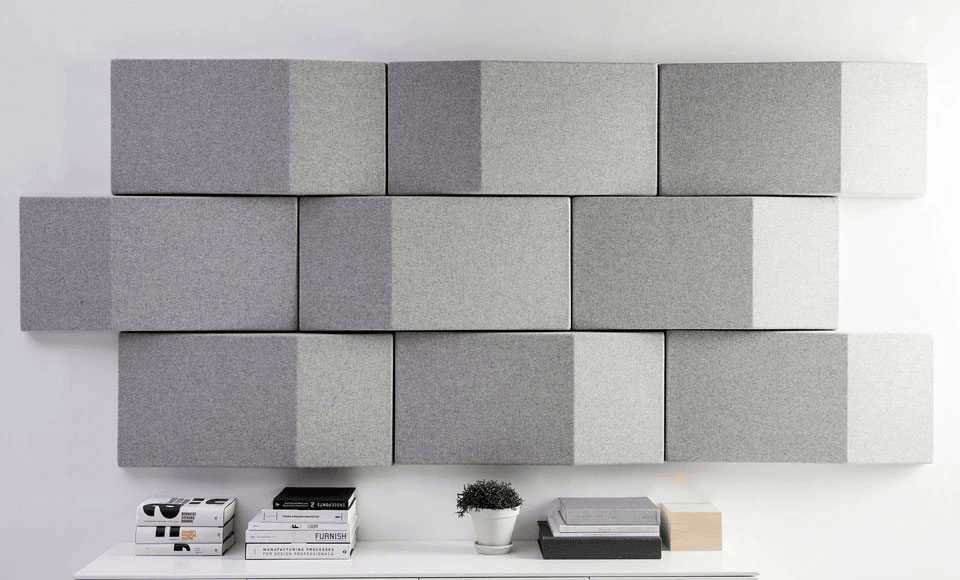
When shopping for acoustic panels, it is easy to be impressed by technical specifications. Product brochures often highlight laboratory test results, sound absorption ratings, and performance certifications, making it seem as though choosing the highest-rated panel is all you need to do.
However, once those panels are installed in a real room, the results may not always match what you expected. The panels themselves are not necessarily underperforming. Instead, the difference usually comes down to the environment in which they are being used.
Laboratory testing provides a reliable way to compare products under controlled conditions, but real spaces are far more complex. Understanding the difference between lab testing and installed conditions can help homeowners, interior designers, and business owners make better decisions when planning an acoustic treatment project.
Why Acoustic Panels Are Tested in Laboratories
Manufacturers test acoustic panels in specialised laboratories to provide consistent and comparable performance data.
Testing takes place in carefully controlled environments where variables such as room size, background noise, humidity, and panel positioning are managed according to recognised standards. This allows different products to be measured fairly under the same conditions.
The results help customers compare products and understand how well a panel absorbs sound across specific frequencies.
Without laboratory testing, it would be much harder to judge whether one product performs better than another.
What Laboratory Results Actually Measure
Laboratory tests focus on the acoustic performance of the panel itself, not the performance of an entire room.
The tests typically measure how much sound the panel absorbs rather than how quiet a room becomes after acoustic panel installation.
One of the most common performance indicators is the Noise Reduction Coefficient (NRC), which summarises how effectively a material absorbs sound across several mid-range frequencies.
Some products may also provide more detailed absorption data across a wider range of frequencies, giving designers a clearer picture of how the panel behaves.
These figures are valuable, but they represent ideal testing conditions rather than everyday environments.
Real Rooms Behave Very Differently
No two rooms are exactly alike.
A living room, meeting room, restaurant, classroom, or office will each have different dimensions, layouts, finishes, and furnishings. These factors all influence how sound travels and reflects throughout the space.
For example, a room with:
- Glass walls
- Tiled flooring
- Concrete ceilings
- Minimal furniture
will behave very differently from one with:
- Carpets
- Curtains
- Upholstered seating
- Bookshelves
- Soft furnishings
Even when the same acoustic panels are installed, the final result may vary considerably because the room itself contributes to the overall acoustic performance.
Installation Location Makes a Significant Difference
Laboratory tests assume controlled positioning, but installation in real spaces requires careful planning.
Panels placed randomly around a room rarely deliver the same improvement as panels installed at key reflection points.
These locations often include:
- Side walls where sound first reflects
- Ceilings above occupied areas
- Walls opposite speakers or workstations
- Large uninterrupted reflective surfaces
Proper placement allows panels to intercept reflected sound before it spreads throughout the room.
In many cases, positioning has a greater influence on the overall result than simply adding more panels.
Coverage Is Not the Same as Performance
Another common misconception is that covering more wall space automatically creates better acoustics.
While additional panels generally increase sound absorption, there is a point where the benefits begin to level off.
Installing panels without considering the room’s layout may lead to uneven performance or a space that feels acoustically over-treated.
A balanced design typically provides better long-term results than simply installing the largest number of panels possible.
Different Frequencies Behave Differently
Sound consists of a wide range of frequencies, and acoustic panels do not absorb every frequency equally.
Laboratory reports often include detailed frequency-specific data because:
- Higher frequencies are generally easier to absorb.
- Lower frequencies require thicker or specially designed panels.
In practice, this means two panels with similar overall ratings may behave differently depending on the type of sound present in the room.
For example, a meeting room focused on speech may have different acoustic requirements from a music room or multimedia space.
Furniture and Occupancy Affect Results
One factor that laboratory testing cannot fully replicate is everyday room use.
People themselves absorb sound, as do:
- Sofas
- Curtains
- Rugs
- Bookshelves
- Office partitions
- Decorative furnishings
As occupancy changes throughout the day, so does the room’s acoustic behaviour.
A meeting room with ten people often sounds different from the same room when empty.
Good acoustic design takes these practical conditions into account rather than relying solely on laboratory data.
Modern Interior Design Influences Acoustics
Many contemporary interiors prioritise clean lines and minimalist aesthetics.
Features such as:
- Large glass panels
- Stone flooring
- Exposed concrete
- Open-plan layouts
create attractive spaces but also increase sound reflections.
In these environments, laboratory-tested acoustic panels become even more valuable. However, achieving the desired outcome often requires integrating them thoughtfully into the overall interior design.
This is why many successful projects consider acoustics early rather than treating it as a final addition.
Laboratory Data Is Still Extremely Valuable
Although laboratory conditions differ from real installations, testing remains an essential part of product selection.
It allows buyers to:
- Compare products objectively
- Verify manufacturer claims
- Assess performance across different frequencies
- Choose materials suited to specific applications
The key is understanding that laboratory results provide a starting point rather than a guaranteed prediction of how a finished room will sound.
Bringing Testing and Design Together
The best acoustic outcomes come from combining reliable product data with thoughtful room design.
Rather than asking, “Which panel has the highest rating?”, it is often more useful to ask:
- What is the room used for?
- Which surfaces create the strongest reflections?
- Where should panels be installed?
- How much coverage is actually required?
Answering these questions leads to solutions that are tailored to the space rather than based solely on technical specifications.
Final Thoughts
Laboratory testing provides valuable insight into how acoustic panels perform under controlled conditions, making it an important tool for comparing products and understanding their sound absorption capabilities. However, installed performance depends on much more than laboratory figures alone.
Room layout, surface materials, furniture, occupancy, and panel placement all influence the final acoustic result. This is why two spaces using the same panels can sound noticeably different.
When planning an acoustic treatment project, it is best to view laboratory data as one part of the decision-making process rather than the entire answer. By combining reliable product testing with careful planning and thoughtful installation, you are far more likely to create a space that not only performs well on paper but also feels comfortable and balanced in everyday use.
