

Key Takeaways
- Define clear objectives and audience expectations before investing in equipment
- Work closely with reliable audiovisual equipment suppliers for seamless integration
- Choose the right live streaming production hardware for quality and stability
- Prioritise audio, lighting, and internet redundancy
- Plan rehearsals, crew roles, and backup systems to avoid costly disruptions
Introduction
Live streaming has shifted from a novelty to a core feature at conferences, product launches and internal town halls across Singapore. From corporate AGMs in Raffles Place to hybrid seminars in Marina Bay, audiences now expect sharp visuals, crisp sound and zero awkward buffering circles.
Planning a professional live streaming production, however, goes far beyond placing a camera in front of a stage. It demands coordination, technical fluency and dependable partners. Without that structure, even the most prestigious event can feel surprisingly amateur. So what should actually guide the planning process?
Start With Purpose, Not Just Gear
Before reaching out to audiovisual equipment suppliers, clarify the objective of the stream. Is the session meant to reassure investors, train regional teams or generate public buzz? Each goal influences the production style.
An investor briefing requires steady multi-camera angles, clean lower-thirds graphics and secure platforms. A brand launch may benefit from dynamic transitions and expressive lighting. The purpose defines the scale and tone.
It sounds straightforward, yet many teams rush to compare cameras and mixers first. Planning backwards from the intended outcome keeps decisions focused and budgets realistic.
The Backbone: Choosing The Right Hardware
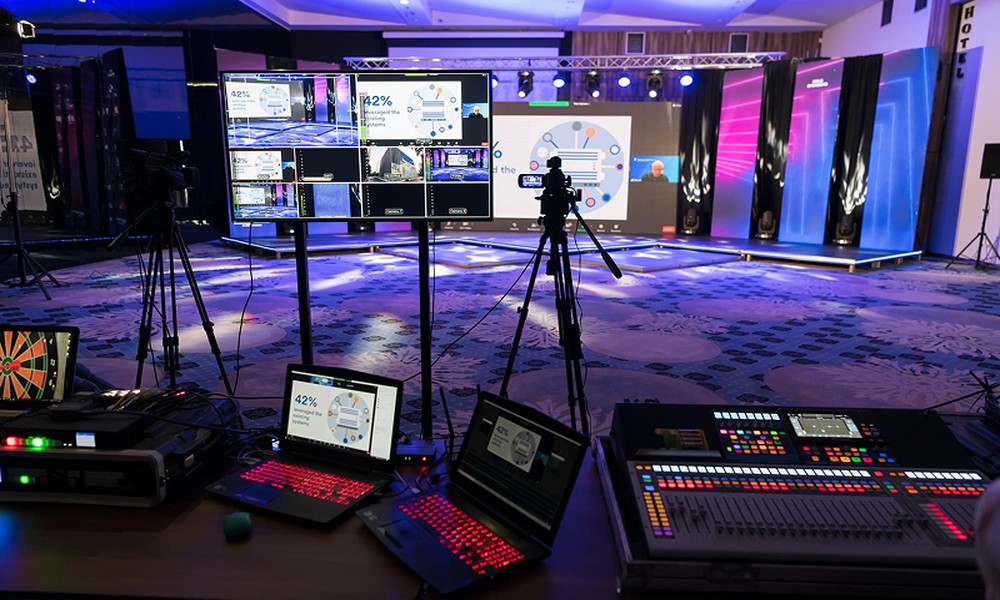
Compelling content alone will not hold viewers if the stream lags or the audio distorts. Reliable live streaming production hardware forms the technical backbone of any serious broadcast.
Encoders, video switchers, capture devices and backup power systems may not grab headlines, but they prevent disasters. Brands such as Blackmagic Design and Roland are frequently used in corporate productions because they offer consistency under pressure. A simple webcam might suffice for an internal update, yet large-scale hybrid events require broadcast-grade systems.
Experienced audiovisual equipment suppliers can recommend configurations suited to venue size, audience reach and bandwidth capacity. Hardware should match the ambition of the event. Not oversized. Certainly not underpowered.
Sound Matters More Than You Think
Audiences often forgive minor visual imperfections. They rarely forgive poor sound.
Clear microphones, calibrated mixers and thoughtful placement make an immediate difference. Lavalier microphones suit panel discussions; handheld options work better for audience engagement. In Singapore’s hotel ballrooms, where ceilings are high and surfaces reflective, proper sound tuning becomes even more critical.
Dependable live streaming production hardware paired with skilled technicians ensures speech remains clear, even when multiple speakers rotate quickly.
Lighting And Framing: The Subtle Game-Changers
Lighting is sometimes treated as decorative. In practice, it is functional. Poor lighting flattens faces and creates distracting shadows. Balanced key, fill, and back lighting adds depth and authority on screen.
Framing also shapes perception. Multiple camera angles introduce rhythm during longer programmes. A single static shot can feel monotonous after twenty minutes. Even a modest two-camera setup, managed through a reliable switcher, can dramatically elevate engagement.
Seasonal cues may influence visual tone. Year-end events often lean towards warmer lighting, while technology launches prefer cooler hues. These details quietly reinforce brand identity without overwhelming the content.
Connectivity: The Silent Hero
The most advanced setup means little without a stable internet. While Singapore’s infrastructure is strong, venue-specific bandwidth can vary. A dedicated wired connection is always preferable to shared Wi-Fi.
Redundancy is not excessive. It is sensible. Backup internet lines or bonded cellular systems ensure continuity if the primary line fails. Many audiovisual equipment suppliers provide integrated connectivity planning, which simplifies coordination and reduces risk.
Connectivity rarely receives applause. Yet it carries the entire performance.
Crew, Rehearsals And Workflow
Technology does not operate itself. Skilled crew members and structured workflows create the real safety net.
A technical director manages camera switching. A streaming engineer monitors bitrate and platform health. A stage manager coordinates speaker cues. These roles must operate in sync, especially during live transitions.
Rehearsals may seem time-consuming, particularly when timelines are tight. However, they reveal slide formatting issues, lighting glare or audio feedback before a live audience notices. Addressing those details early protects credibility.
Budget Considerations Without Cutting Corners
Cost inevitably shapes production decisions. Trimming expenses by reducing crew or downgrading live streaming production hardware may appear efficient, but it often introduces risk.
A practical approach prioritises viewer-facing essentials: audio clarity, stable video feed and dependable platforms. Decorative elements can be scaled if needed. Core systems should remain strong.
Partnering with experienced audiovisual equipment suppliers often results in balanced solutions that maintain professional standards without unnecessary add-ons.
Conclusion
Professional live streaming production blends storytelling with engineering. Clear objectives anchor the strategy. Reliable live streaming production hardware provides technical stability. Trusted audiovisual equipment suppliers ensure seamless integration across audio, video and connectivity.
When everything aligns, the stream feels effortless. When planning is rushed, even minor glitches become glaring distractions.
For organisations planning their next hybrid event or corporate broadcast, contact Media Architects to secure dependable equipment and expert support that elevates every live production.
