


Digital Infrastructure and Media: The Foundation of Modern Communication
In April 2026, our digital world is more intertwined than ever before. The content we consume, the ways we communicate, and even the fundamental services we rely on are all powered by a complex, invisible network: digital infrastructure. This isn’t just about the internet anymore; it’s the very foundation of modern society and the media landscape. Understanding this relationship is crucial for anyone navigating today’s rapidly changing environment.
We are witnessing a profound shift in which digital platforms are becoming essential services, shaping economies and even influencing global power dynamics. Traditional media companies, and even specialized firms like a Digital media agency, are grappling with new competition and evolving consumer behaviors.
In this comprehensive guide, we will unpack the intricate world of digital infrastructure and media. We’ll explore its definition, how digital platforms have become indispensable, the key drivers behind massive investments, and their impact on everything from global competition to everyday entertainment. Join us as we examine the challenges, opportunities, and future trends that are redefining our connected future.
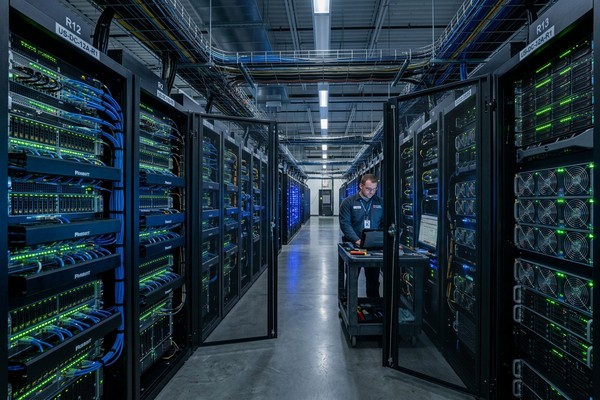
At its core, digital infrastructure encompasses the vast network of physical hardware, software, and protocols that enable the creation, transmission, storage, and consumption of digital data. This includes everything from undersea fiber optic cables and satellite networks to data centers, cloud computing platforms, and the software applications that run on them. It’s a complex, multi-layered system that underpins nearly every aspect of modern life.
How does this differ from traditional media infrastructure? Traditional media infrastructure, such as broadcasting towers, printing presses, and physical distribution networks for newspapers and magazines, was largely a one-way system. Content was produced centrally and disseminated to a passive audience. Its physical nature meant high barriers to entry and limited interactivity.
Digital infrastructure, by contrast, is inherently multi-sided and interactive. It facilitates two-way communication, user-generated content, and on-demand access to information and entertainment. Digital platforms, built upon this infrastructure, have evolved from mere applications to de facto essential services, often referred to as “infrastructures” themselves. This “infrastructuralization” means that these platforms are no longer just tools; they are the very environment in which much of our social, cultural, political, and economic interactions occur. As explored in research on material conditions for journalism, understanding these foundational elements is crucial for comprehending the modern media landscape.
The Evolution of Digital Infrastructure and Media Platforms
Digital platforms have become the “core organizational form of the emerging informational economy,” according to one academic insight. They operate on principles of “connect-and-coordinate” rather than “command-and-control,” enabling vast networks of users, businesses, and content creators to interact. Several key factors characterize this evolution:
- Scale and Indispensability: Platforms such as major social networks and search engines have achieved unprecedented scale, becoming indispensable in daily life. Their sheer user base and integration into various services make them critical utilities.
- Big Data and Algorithms: These platforms thrive on big data, stored and processed in the cloud, and powered by sophisticated algorithms. These algorithms analyze user preferences, curate content, and drive recommendations, fundamentally shaping consumer behavior and cultural flows.
- Network Effects: The value of a platform often increases exponentially with the number of users, creating powerful network effects that make it difficult for new competitors to emerge. This leads to concentrated power among a few dominant players.
- Invisible Labor: The smooth functioning of these digital infrastructures relies on a vast amount of often “invisible labor,” including content moderation, data management, and system maintenance. This labor is crucial but frequently overlooked in discussions about digital media.
For any organization operating in the digital sphere, from a global conglomerate to a specialized Digital media agency, recognizing the foundational role of these platforms is paramount. Their ubiquity means they dictate the terms of engagement, content distribution, and audience reach.
Governance and the “Infrastructural” Shift
The transformation of digital platforms into essential infrastructures carries profound implications for governance, regulation, labor, and citizenship in the digital economy. When platforms become indispensable for public discourse, commerce, and social connection, they begin to wield power traditionally associated with public utilities. This raises critical questions about:
- Privatization of Public Utilities: Should entities that function as essential public services be governed by private corporations primarily driven by profit? This challenges traditional notions of public goods and civic spaces.
- Regulatory Frameworks: Existing regulatory frameworks often struggle to keep pace with the rapid evolution of digital platforms. New approaches are needed to address issues like data privacy, content moderation, algorithmic bias, and market dominance.
- Labor Rights: The “invisible labor” that sustains these platforms often operates under precarious conditions, highlighting the need for robust labor protections in the gig economy and for content moderators.
- Digital Citizenship: Access to and participation in these digital infrastructures are increasingly fundamental to full citizenship. This includes ensuring equitable access, protecting freedom of expression, and fostering inclusive digital spaces.
As detailed in an analysis of pipes and politics, an interdisciplinary approach that combines platform and infrastructure studies is essential to fully grasp these complex dynamics. This perspective helps us understand not just the technological aspects, but also the social, material, cultural, and political dimensions of the infrastructures that sustain our media and communication networks.
Economic Drivers and Geopolitical Competition
Investments in digital infrastructure are not merely about technological advancement; a complex interplay of economic, social, and geopolitical motivations drives them. Nations and organizations pour resources into this sector for reasons spanning from economic development and fiscal efficiency to national sovereignty and intense global competition.
- Economic Development: Robust digital infrastructure is a cornerstone of modern economies, enabling e-commerce, digital services, and innovation. IFC, for instance, has committed and mobilized over $9.6 billion for Telecom, Media & Technology (TMT) projects since 2015, recognizing its role in fostering growth, particularly in emerging markets.
- Fiscal Efficiency and Public Services: Digital Public Infrastructure (DPI) can dramatically improve government efficiency and service delivery. Estonia, for example, claims to save 2% of its GDP through the widespread use of digital signatures, and countries with interoperable public data systems reached three times as many people with emergency aid during COVID-19.
- National Sovereignty: Control over digital infrastructure is increasingly seen as vital for national security and autonomy. This includes securing data, controlling communication networks, and protecting against cyber threats.
- Global Competition: The digital realm is a new arena for geopolitical competition, most notably between the US and China. As outlined in a RAND framework for military competition, digital infrastructure shapes long-term military competition and power projection, with both nations vying for ownership, access, and control to support their forces and extend global influence.

Digital Public Infrastructure (DPI) and Policy Trade-offs
Digital Public Infrastructure (DPI) refers to shared digital systems, such as identity, payments, and data exchange, that are essential to the functioning of a state and society. While immensely promising, DPI involves inherent trade-offs between various policy goals:
- Efficiency vs. Inclusion: Striving for maximum efficiency might inadvertently exclude segments of the population lacking digital literacy or access. Conversely, prioritizing inclusion could lead to higher initial costs or slower implementation.
- Sovereignty vs. Innovation: A strong focus on national sovereignty might lead to closed systems that stifle innovation, which often thrives in open, collaborative environments. Conversely, embracing global standards and foreign technology could compromise data sovereignty.
- Neutrality Myth: DPI is not neutral. Its outcomes depend heavily on governance, use cases, and surrounding policies. Without clear definitions, it risks being captured by existing power structures.
Countries are making different choices. While India’s Aadhaar and UPI systems have been hailed for their efficiency and inclusion, other nations grapple with defining their DPI goals. Understanding these nuances is critical for effective governance, as highlighted by various Digital infrastructure media insights that analyze these complex policy decisions. Governments must explicitly define their national DPI goals to avoid wasted resources or importing objectives that don’t align with their societal values.
Addressing the Global Digital Divide
Digital infrastructure plays a crucial role in bridging the digital divide, particularly in emerging markets where access to reliable internet and digital services remains a challenge. Organizations like IFC actively finance mobile network operators in less developed markets to expand connectivity.
Shared infrastructure models, such as carrier-neutral, open-access broadband networks and independent tower companies, are proving to be cost-effective and environmentally conscious solutions. These models promote competition and accelerate broadband deployment, especially in areas where traditional private investment might be scarce. The revenues from digital platform transactions in emerging markets have been growing rapidly at 15-25% annually, underscoring the immense potential for economic growth when connectivity is established.
However, challenges persist. Rural areas, even in developed nations, often struggle with adequate infrastructure. The ongoing debates around rural connectivity, such as those over data center development in places like South Dakota, illustrate the complex interplay of economic opportunity, environmental concerns, and local identity in expanding digital access. Ensuring equitable access remains a global priority for sustainable development.
Disrupting the Screen: Social Video and the New Media Economy
The media and entertainment landscape is undergoing a seismic shift, largely driven by the meteoric rise of social video platforms and user-generated content (UGC). These hyperscale, hyper-capitalized platforms are not just competing with traditional studios, streaming services, and pay TV; they are fundamentally disrupting their business models and capturing audience attention at an unprecedented rate.
Consider the dramatic change in consumer behavior: Gen Z, for instance, spends 54% more time-about 50 minutes more per day-on social platforms and UGC than average consumers. Conversely, they spend 26% less time-about 44 minutes less per day-watching traditional TV and movies. This generational divide underscores a profound reorientation of media consumption habits.
The decline of traditional pay TV is stark. In April 2026, only 49% of consumers surveyed reported having a cable or satellite TV subscription, a significant drop from 63% just three years prior. While subscribers still spend an average of $125 per month on these services, they allocate only $69 for four paid streaming services combined. This shift highlights a clear preference for flexible, on-demand streaming options that are often more affordable.
The streaming video on-demand (SVOD) market itself is evolving rapidly. While the average household subscribes to four paid SVOD services, the overall cost has risen 13% in the past year to $69 per month. This increase, coupled with content saturation, is driving high churn rates: 39% of consumers have canceled at least one paid SVOD service in the last six months. To combat this, ad-supported tiers are becoming increasingly prevalent, with more than half of SVOD subscribers (54%) now having at least one such service.
The table below illustrates the stark contrast between traditional pay TV and the emerging dominance of social video platforms:
Feature Traditional Pay TV (April 2026) Social Video Platforms (April 2026) Subscription Rate 49% of consumers Near-universal among younger demos Monthly Cost ~$125 (for cable/satellite) Often free (ad-supported) Gen Z Time Spent 26% less than average consumer 54% more than average consumer Ad Spending Slow growth (~2.4% global TV) Over half of US ad spending Content Type Curated, professional studios User-generated, influencer-driven Discovery Method Scheduled, linear, guides Algorithmic, social sharing Adapting to the New Digital Infrastructure and Media Landscape.
Traditional media companies, including studios and streaming providers, face an urgent need to adapt. Competing with hyperscale social platforms requires more than just producing great content; it demands a fundamental shift in strategy for content discovery, audience engagement, and monetization.
Key adaptation strategies include:
- Investment in Ad Tech and AI: Social platforms possess superior ad tech and AI capabilities, enabling highly targeted, efficient advertising. Traditional media must invest heavily in these areas, perhaps through strategic partnerships, to deliver competitive ad impressions and conversions.
- Audience Aggregation: To compete for ad dollars, traditional players need scale. This might involve mergers and acquisitions or innovative aggregation strategies that combine multiple content offerings into a single, addressable ad market.
- Ad-Supported Models: The rise of ad-supported SVOD tiers is a direct response to consumer price sensitivity and the need for new revenue streams. This trend is likely to continue, requiring sophisticated ad management infrastructure.
- Technological Adoption: Embracing virtual production, generative AI for cheaper and faster content creation (e.g., dubbing, translation), and AI-driven automation for operational functions can help control costs and increase output.
- Leveraging Social Platforms: Rather than viewing social platforms solely as competitors, traditional media must recognize them as vital channels for marketing, content discovery, and audience engagement. Marketing efforts for films and TV increasingly begin and end on these platforms.
- Engaging Content Creators: The “celebrity” landscape has changed, with younger generations often feeling a stronger personal connection to social media creators than traditional actors. Studios can collaborate with these creators to unlock virality, shape culture, and reach new audiences.
The Transformation of Advertising and Cultural Flows
The dominance of social platforms has profoundly transformed advertising models and cultural flows. Social media ads are now the most influential factor for purchasing decisions among 63% of Gen Z and 49% of millennials. These younger generations also find social media content more relevant (56% of Gen Z, 43% of millennials) and get better recommendations from social media (53%) than from traditional sources.
This shift is driven by:
- Algorithmic Curation: Platforms use sophisticated algorithms to personalize content feeds, leading to highly tailored cultural flows and the reinforcement of specific interests.
- Parasocial Relationships: The direct, often intimate connection users feel with content creators fosters strong parasocial relationships, making influencer marketing incredibly powerful.
- Ad Tech Superiority: Social platforms’ ability to collect vast amounts of user data allows for unparalleled targeting and optimization, making their advertising inventory highly attractive to brands.
- Cross-Medium Success: While 30% of consumers believe creators lose authenticity when featured on TV, 29% would watch TV shows starring their favorite creators, and 56% of younger generations watch TV shows on SVOD after hearing about them from creators online. This indicates a permeable boundary between social and traditional media, where influence flows in both directions.
Global ad revenues for TV, including streaming video, are expected to grow slowly at around 2.4% over the coming years, while social platforms continue to capture a larger share of the advertising pie. This necessitates a strategic re-evaluation of traditional media, pushing them to innovate and integrate with the digital infrastructure that defines the new media economy.
Technical Pillars: Server Hosting and Connectivity
Behind every seamless streaming experience, every lightning-fast download, and every interactive media platform lies a robust technical infrastructure. The physical components of digital infrastructure-server hosting, networking, and connectivity-are the unsung heroes that enable the entire digital media ecosystem.
For media production and consumption, these technical pillars are paramount:
- Low-Latency Hosting and Edge Computing: Delivering high-quality video, especially live streams or interactive content, demands minimal delay. This is achieved through low-latency hosting solutions and the increasing adoption of edge computing, which brings data processing closer to users, reducing network travel time.
- 5G Networks: The rollout of 5G technology is revolutionizing mobile connectivity, offering unprecedented speeds and lower latency. This empowers mobile content creation, enhanced streaming quality, and new forms of interactive media, such as immersive augmented and virtual reality experiences.
- Content Delivery Networks (CDNs): CDNs are crucial for global content distribution. They cache content on servers closer to users, ensuring faster load times and better performance regardless of the user’s location.
- High-Bandwidth Requirements: Media, particularly high-definition video, is bandwidth-intensive. The underlying fiber optic networks and wireless technologies must support ever-increasing data volumes to prevent buffering and ensure a smooth user experience. This is especially critical for demanding applications like Gaming digital infrastructure, where split-second responses are essential.
Future Trends in Digital Infrastructure and Media Technology
The digital infrastructure landscape is continuously evolving, with several key trends poised to redefine how we create, distribute, and consume media in the coming years:
- Generative AI: Beyond content creation, AI will play an increasingly vital role in optimizing infrastructure. This includes predictive maintenance for data centers, intelligent network management, and automating complex tasks in media workflows, from dubbing and translation to real-time rendering.
- Data Center Expansion and Specialization: The demand for data storage and processing power continues to skyrocket. We will see continued expansion of hyperscale data centers, alongside a rise in specialized facilities designed for specific workloads, such as AI training or high-performance computing. Efforts towards low-carbon telecom solutions will also drive innovation in energy-efficient data center design.
- Satellite Technologies: The proliferation of low Earth orbit (LEO) satellite constellations is expanding internet access to remote areas globally, creating new opportunities for content distribution and connectivity in underserved regions.
- Advanced Payment Ecosystems: As digital transactions become more ubiquitous, the infrastructure supporting them will become even more sophisticated. Companies like ACI Worldwide, powering payment ecosystems, will continue to innovate, ensuring secure, efficient, and integrated payment solutions for digital media services.
Infrastructure Resilience and Civic Spaces
The reliance on digital infrastructure extends beyond entertainment and commerce to the very fabric of our civic lives. As digital platforms become de facto public spaces, the concept of “digital public goods” and the need for resilient, civically-minded infrastructure gain prominence.
The current model, often driven by surveillance capitalism, has led to concerns about misinformation, polarization, and the erosion of healthy civic discourse. This has sparked a growing call for alternative models, including:
- Decentralized and Federated Social Media: Instead of monolithic platforms, future civic digital spaces might be decentralized and federated, comprising numerous smaller, governable communities. This allows for diverse governance models and reduces the power of any single entity.
- Non-Surveillant Advertising and Alternative Funding: Moving away from business models reliant on behavioral tracking and data exploitation is crucial. This could involve subscription models, micropayments, or even public funding, as is the case with traditional public broadcasting.
- Intentional Design for Civic Discourse: As argued in the case for digital public infrastructure, we need to design digital spaces with explicit civic goals intentionally. These platforms would prioritize informing, connecting diverse individuals, and fostering dialogues that challenge existing understandings, rather than optimizing for engagement metrics that can lead to sensationalism.
Ensuring the resilience of this infrastructure, both technically and ethically, is paramount. This means not only building robust networks and secure data centers but also fostering governance models that prioritize public good over private profit, creating digital spaces that truly serve the interests of all citizens.
Frequently Asked Questions about Digital Infrastructure and Media
What is the difference between digital infrastructure and traditional media infrastructure?
Traditional media infrastructure relied on one-way broadcast hardware like towers, printing presses, and physical distribution networks, primarily for disseminating content to a passive audience. Digital infrastructure, by contrast, is a multi-sided ecosystem of data centers, cloud computing, high-speed networks (such as fiber and 5G), and interactive platforms that facilitate two-way communication, user-generated content, and on-demand, personalized experiences. It’s built for interactivity and data exchange, rather than just broadcast.
How are social platforms disrupting traditional media and entertainment?
Social platforms are disrupting traditional media by capturing a dominant share of audience attention and advertising revenue. Gen Z, for example, spends 54% more time on social video platforms and user-generated content, while dedicating significantly less time to traditional TV and movies. This shift has led to a decline in cable/satellite TV subscriptions, high churn rates for streaming services, and a significant portion of US ad spending moving to social platforms. Traditional media companies are forced to adapt by investing in ad tech, AI, new production technologies, and leveraging social platforms for marketing and audience engagement.
What role does digital infrastructure play in national security?
Digital infrastructure is a critical component of national security and a primary site of geopolitical competition, particularly between major global powers. Control over data centers, undersea cables, satellite networks, and communication technologies determines a nation’s ability to project power, conduct intelligence, secure its communications, and maintain economic resilience. Disrupting or controlling an adversary’s digital infrastructure can have significant military and economic implications, making it a strategic asset in global competition and potential conflict.
Conclusion
The landscape of digital infrastructure and media in April 2026 is one of rapid evolution, profound disruption, and immense opportunity. We’ve explored how digital platforms have transcended their initial roles to become indispensable infrastructures, shaping everything from global economies and geopolitical power struggles to our daily media consumption habits.
The ongoing “infrastructuralization” of digital platforms presents both challenges and responsibilities. It necessitates a critical re-evaluation of governance models, a proactive approach to addressing the digital divide, and a strategic imperative for traditional media to adapt to new competitive dynamics. The rise of social video, user-generated content, and advanced ad tech demands innovation in content discovery, audience engagement, and monetization strategies.
Looking ahead, the convergence of AI, expanding data centers, advanced telecom networks, and satellite technologies will continue to redefine the very fabric of digital infrastructure. As we navigate this future, the emphasis must be on strategic investment, technological convergence, and the responsible development of resilient, inclusive, and civically-minded digital spaces. The journey from media production to robust server hosting is no longer a linear path but a complex, interconnected ecosystem that requires foresight, adaptability, and a commitment to shaping a digital future that benefits all.
